The Origins and Evolution of Freedom in the USA
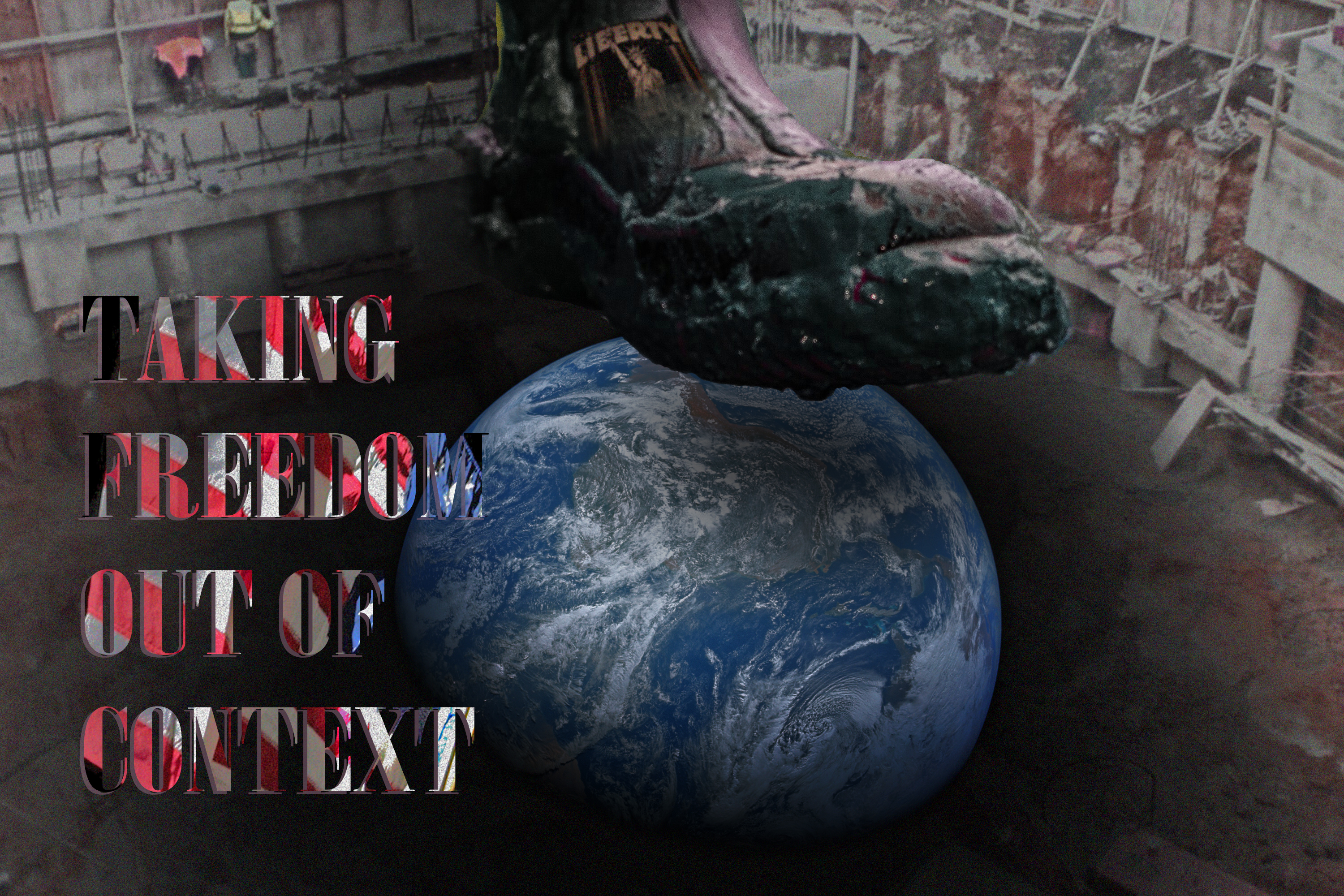
Freedom has always been a value maintained deep in the marrow of any red-blooded American. It often seems like an unquestionable moral principle, or cornerstone laid deep in the foundation of the USA constitution. For this reason, it may be our last hope for establishing a common ground among the great diversity of religious, political, and philosophical views held within this increasingly polarized country. If so, then it’s crucial that we understand what “freedom” means. In recent years, however, the concept of freedom has been invoked by both politicians and corporate leaders alike to justify economic and geo-political agendas that often have quite disastrous implications for the preservation of democracy and human habitation on the planet more generally. With this in mind, I would like to examine what is implied by some of the most powerful and popular appeals to freedom—I want to uncover what is at stake when we accept one definition of freedom over another, and how we might reimagine this concept.
The first time that the concept of individual “freedom” appeared—albeit implicitly—in an official document of the USA can be found in The Declaration of Independence (1776):
We hold these truths to be self-evident, that all men are created equal, that they are endowed by their Creator with certain unalienable Rights, that among these are Life, Liberty and the pursuit of Happiness. That to secure these rights, Governments are instituted among Men, deriving their just powers from the consent of the governed,—That whenever any Form of Government becomes destructive of these ends, it is the Right of the People to alter or to abolish it, and to institute new Government, laying its foundation on such principles and organizing its powers in such form, as to them shall seem most likely to effect their Safety and Happiness.
Here, we only find an appeal to “self-evident” truths, the notion that whatever freedom is, it can be discerned through an intuitive sense of what impedes our efforts to “Life, Liberty, and the pursuit of Happiness.” Indeed, this idea was initially cast more clearly in relation to the country’s economic independence from Britain than it was in terms of individual rights or purpose. In the Bill of Rights (1789) however, we find a series of amendments, which posit mostly negative articulations of freedom that protect individuals from unjust restrictions on speech, religion, press, etc.
Over the centuries, there has been a rather fascinating, if not utterly disturbing, sleight of hand that has transfigured such intuitive conceptions of freedom in some profound ways. Interpretations of the 14th Amendment have imbued companies with the rights of persons, while the Supreme Court case Citizens United v. FEC (2010) ruled that corporations have a First Amendment right to free speech, and that donations to political parties constitutes speech. A consequence of the latter, which I will consider in greater detail below, is that corporate donation to politicians have known no bounds. These examples are not at all “self-evident” extensions of freedom, but this is the world we find ourselves in today. In what follows I will consider three cases in which the concept of freedom has been taken out of its appropriate context as a means of establishing how it might be more appropriately situated and enacted.
Thiel’s “One World or None”
In his recent discussion with the New York Times with Ross Douthat, Peter Thiel made a case that the stagnation of progress is perhaps the greatest danger for the modern world. His conception of the Antichrist is someone who basically says, “follow me to avoid your greatest fears of Skynet,” which consequently results in a tyrannical, ultra-stagnated world. This he called the“One World or None” mentality. Thiel’s point is apparently that progress must take far greater risks; that regulation and common ground over environmental concerns will surely lead to the ruin of humanity. This is essentially an appeal to the free market to continuously lead us to prosperity and justify Thiel’s own efforts.
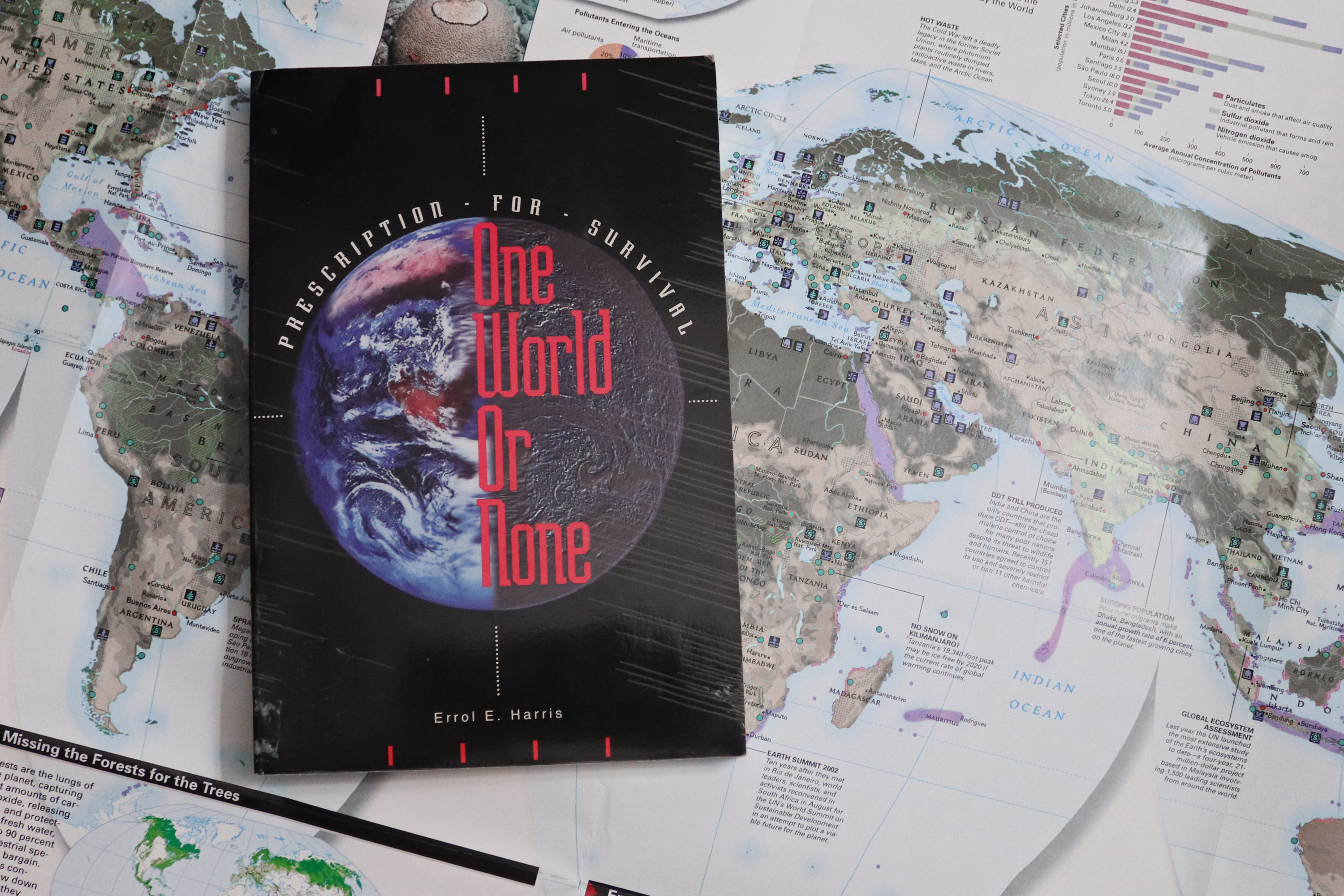
This is fascinating to me because one philosopher for whom I have great affinity, Errol E. Harris (1908–2009), once wrote a book called One World or None (1992), which came to the exact opposite conclusion as Thiel. In this text, Harris had quite a bit to say about the conditions of our collective survival, pollution, war, etc., and he urged his readers that our only way to survive is to appreciate the nature of our common context. In this way, Harris would surely appear to Thiel an enemy of what he thinks is necessary for freedom and progress. Nevertheless, I think Harris’s thesis in this book, and his philosophy in general, provides an excellent means of highlighting where Thiel has gone wrong.
Consistent with Thiel’s use of “antichrist,” Harris claimed that evil occurs in any case that we assume something—whether an activity, object, or abstract concept—should be granted absolute value. In other words, this involves presuming a part to hold the absolute value of the whole to which it belongs. This can manifest as a kind of stagnation (as Thiel argued), though I think we can more accurately refer to it as a homogeneity and reduction of humanity to some preconceived abstraction. An obvious example would be found in totalitarian dictatorships, in which a singular authority decides the values, means, and ends for its constituents. It is important to notice that this can take place on the scale of an organization, community, or state as well. Again, totally consistent with Thiel’s point so far. Nevertheless, I believe these latter points will reveal the most significant mistake in Thiel’s implicit assumption about the nature of freedom.
To make my case, I would like to begin with a thought experiment. Imagine the most self-made and willful individual you can. This person has overcome innumerable obstacles and taught themselves how to navigate the environments that were precisely necessary and sufficient for them to acquire the evidence that their efforts were worth the outcome. Of course, this evidence of willful perseverance, intelligence, and acumen must be wealth, as no other fruit would be as universally recognizable. Moreover, only wealth could be so easily reinvested to create new forms of success in other areas, thereby further reinforcing the unmistakable presence and power of “will” in this individual.
Now, I’d like you to take this thought experiment to its limit: at what point, if any, does the concept of “will” create a kind of contradiction or self-negation? We might imagine that this individual is now the epitome of “rags to riches,” they have risen to the highest ranks of government and even taken for themselves the title of Supreme Leader. In this case, I submit, we rediscover the notion of “one world or none,” which takes whatever form our Royal Highness of Absolute Leviathan would like it to have. It is crucial to note at this point that with limitless power, one apparently has limitless time to make the world as they would like it to appear. This time comes in various forms: the labor individuals can be paid to perform, data analysis performed by AI, Bitcoin mining, or the energy that translates into speed of calculations on the stock exchange. Is this individual, with all their powers of influence, not the epitome of freedom?
“Freedom,” I believe, is only possible when it occurs in relation to a context, which determines the kinds of responsibilities that follow from the powers an individual can wield. For example, we are responsible for those we have power over, if for no other reason than our reliance on them to warn us when our actions might result in our own (and humanity’s) potential demise. In order for others to be able to deliver this critical warning, they need the agency to discover the world and speak for themselves without surveillance and the imposition of values.
Indeed, if we ignore context, we may attempt to obtain any degree of power imaginable and externalize all responsibilities or costs to everyone else, but in so doing, we also take away the (less “willful” ones’) capacity to adequately respond to the challenges that result from the world we have created. If we permit the kind of absolute freedom that Thiel and others apparently wish to obtain for themselves, then we leave it up to those individuals to decide how much freedom (or options) the rest of us can have.
Because they can invest in such a way that effectively decides what costs to externalize, they can reshape landscapes of responsibility; and, in the most extreme cases, this means our maximally free individual can invest endlessly in preserving a view of the world they want to be true, irrespective of the reality the rest of us are embedded in. An example of such context-shaping today is mass-datafication. Much like the narcissist’s reflection, the data that is collected on all of us is not about our individual experiences, nor our collective context. This is because the defining values, patterns, and relations of this data have been decided in advance, so what returns to the analysts is largely a reflection of the assumptions that were projected onto the population in the first place. Consequently, datafication actually inhibits our ability to be in-formed by our common context, which requires not a reduction to some common language (data), but an integration across all possible perspectives regarding what and how anything can or should be valued or perceived.
Of course, this is only a thought experiment and many individuals who obtain such powers of freedom are inclined to seek the wisdom of others, rather than assert their own vision of the world. However, my point is that this openness to the insights of others is something beyond the scope of one’s will—it actually involves a deliberate surrender of the will to discover something more about the world beyond our limited conception of it.
Such an openness to the perspectives and insights of others necessarily alters, refines, and transforms the trajectory of our will precisely because it provides a context within which the very meaning of our will is defined. Thiel’s mistake is thus in presuming that the solution to our present socio-political and ecological challenges is a lack of constraints on economic dynamics. This is because such constraints are required to ensure that those with the greatest degree of freedom, do not transform the sociopolitical system in such a way that it becomes increasingly detached from reality, and from the unique wisdom each individual can provide about this reality.
Musk’s Absolute Freedom of Speech
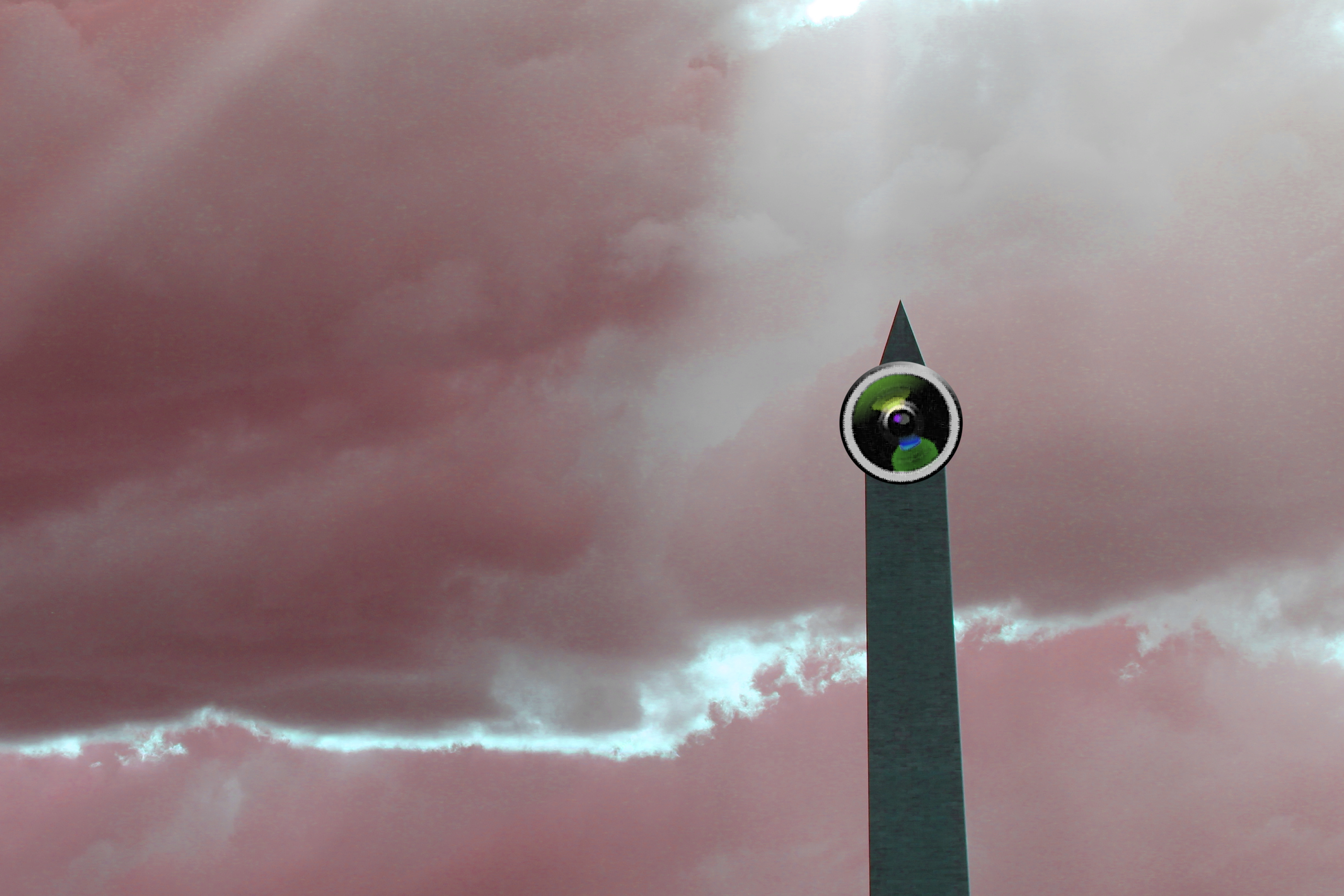
So far, I have been making the general point that a total lack of constraints on the operation of “willful” individuals, businesses, or governments would be consistent with the conditions that permit Thiel, or someone like him, to maintain their own absolute power, but in so doing, “freedom” becomes increasingly impossible for everyone else (Vallor, 2024). In such cases, our maximally free individual must invest exponentially more energy into preserving the preconception of their self-world relation, which is both unsustainable and ignorant of the perspectives of others, who effectively compose the context of his freedom. To take another example that is gaining increasing attention in social media and ethics classes these days, I will consider the absolute freedom of speech defended by Musk.
Since acquiring Twitter (now X), Musk has collapsed the offices and personnel responsible for constraining the kind of speech permitted on the platform. Though this has become a massive area of debate, I would like to suggest a rather simplified way to address the issue (via reductio). Musk apparently assumes that freedom of speech is greater than any other value, since he is surely intelligent enough to understand that by constraining speech he would be preserving some other value, such as peace. I imagine that this has become a popular position among his supporters because it reflects the mentality of neo-liberal economics. Here, it is left to the invisible hand of the economy at large to decide what individuals, products or businesses should succeed.
At least implicitly, Musk’s position on free speech—and on economics more broadly—places a great deal of faith in the individuals participating in his platform. This is a faith in their ability to wield their own cognitive powers of discernment, to identify false information, and to rise above any information that would otherwise offend someone of weaker emotional status. In the first instance, this view of the commons depends upon a theory of evolution that is strictly survival of the fittest—which leaves no room for symbiogenesis or cooperation—and presumes that such an unregulated free-for-all of information will forge individuals akin to Nietzsche’s Übermensch, both in terms of cognitive capacity and emotional resilience. While I can appreciate why his supporters would perhaps unconsciously appreciate this apparent act of faith on their behalf, I also think this view fails to adequately appreciate the majority of research that has come out of evolutionary biology and cognitive psychology over the past 100 years or so.
I think the appeal of this kind of freedom speaks to those who already believe (or want to believe) that they can navigate any depth of disinformation and that truth will always prevail under such conditions. This of course reiterates an antiquated neo-liberal “survival of the fittest” mentality, which quickly falls apart when applied to the contemporary research in economics, politics, and human psychology. To identify the crux of the problem does not take more than to consider how susceptible people are to social programing, corporate interests, and targeted ad campaigns. When “freedom of speech” protects corporations and politicians to invest billions into shaping your context—from the food you eat to the “scientific” information available, and the entertainment you enjoy—while at the same time eviscerating those who disagree with them, it is no longer a matter of “survival of the fittest.” This is because the landscape of information has itself been transformed by those who have the greatest powers of influence, which then decides what is “fit.”
The landscape used to define fitness has now been engineered by the wealthiest stakeholder, which permits a radical reshaping of what speech is heard in the first place. Insofar as we want to promote the conditions that would permit ongoing adaptation, development, and evolution to greater heights of human potential, permitting such massive investment into transforming the values of our socio-economic systems on such a large scale will surely lead to the very stagnation that Thiel and Harris are worried about—albeit for different reasons. All of this is to say that making freedom of speech an absolute value consequently neglects the context of communication, and thereby contradicts the value of “freedom” with which we began.
The only way around this challenge is if individuals somehow develop to be impervious to the effects of all the propaganda and manipulation that money can buy. This is not only laughable on a psychological level, but also culturally, since these investments have undoubtedly changed the sensorimotor habits and material organizations of our world. Speech, therefore, cannot be totally separated from its material effects. This is increasingly apparent as global markets shift in response to the social media posts of the few. In the end, Musk is either completely ignorant or at odds with himself about the responsibility he has for how much he can influence cultures and economies with just a single utterance.
.jpg)
A TESCREAL Freedom of Cosmic Proportions
“TESCREAL” is an acronym initially proposed by Ethiopian-born computer scientist and AI ethicist Timnit Gebru and American philosopher Émile P. Torres (2023) to describe seven interconnected, techno-utopian ideologies. Though this term is not so common in recent discussions about AI, I think that it is quite important for highlighting a paradigm that can only gain momentum insofar as its macroscopic form remains unnoticed. The basic commitments of this worldview can be summarized as follows:
- Transhumanism – the belief that humans should use various forms of technology (e.g. genetic engineering, AI, cybernetics) to enhance our physical and mental capabilities, thereby transcending our biological constraints—this is clearly a claim for the freedom from biology.
- Extropianism – the endorsement of continuous technological progress that ultimately involves humans extracting resources from and inhabiting the entire cosmos—what I call freedom to colonize ad infinitum.
- Singularitarianism – based on a presumed exponential increase in the number of transistors on microchips coupled with a decrease in their cost, Moore’s Law predicts humans will create artificial general intelligence (AGI) and then super intelligence (ASI), which (proponents claim) will inevitably lead to a “singularity” of boundless computational efficiency. This presumes that we will acquire a freedom beyond any cognitive constraints in problem solving.
- Cosmism – combining extropianism and the singularity, we find the intention to expand human consciousness spatially throughout the universe and temporally beyond any conceivable limits by merging consciousness with a digital medium. This kind of freedom finally moves (or returns) proponents into a dualist metaphysics, in which the digital medium of consciousness and our access to the singularity recapitulates the Christian mythos of merging the human spirit with God.
- Rationalism – an internet-based community initially formed around sites like LessWrong, which emphasizes using epistemic tools of STEM, logic, and Bayesian inference to avoid biases and understand the world. Proponents downplay the risks from AI to serve the economic interests of Silicon Valley. This is a methodological means to the above ends of freedom.
- Effective altruism – a movement supposedly based on “evidence” and “reason” to determine the most effective ways to benefit others, which has increasingly focused on mitigating long-term risks (like an AI apocalypse) rather than immediate, local problems. This effectively involves freedom to wield power to transform futures for everyone, based on the ends that are deemed valuable to a few.
- Longtermism – coined by Oxford philosophers William MacAskill and Toby Ord (2017), it maintains that positively influencing the long-term future (potentially trillions of future humans) is a moral priority. Proponents argue that we should spend resources to prevent existential risks, which are calculated in terms of probabilities. Just like my response to effective altruism, I think we need to ask, freedom for whom and at what cost to those who are alive today?
In general, I agree with Gebru and Torres’s view that TESCREAL ideologies represent a “third wave” of eugenics, since the technological “upgrades” to human cognition and biology will surely exacerbate the already massive class divisions in the Western world we see today. This is not to say that I resist any form of human transformation or development, indeed I applaud it, but its institutionalization must be recognized to be guided by both an ethics and a metaphysics that cannot possibly have “humanity’s best interests” at heart insofar as these interests are presumed to be known through any degree or kind of calculation from the start. This is because making this claim effectively commits an act of bad faith against humanity as a whole—it presumes to know what we are and what we should become without adequately comprehending the innumerable (and thus unprestateable) contexts of our becoming.
The problem that I see with Longtermism and Effective altruism is that they encourage proponents to presume that they already possess the optimal tools of reasoning. These tools tend to come down to computational power across the natural sciences, formal logic, and an often-unspoken appeal to utilitarianism. The problem with the former two is that the history of science has revealed that logics are only relevant within some boundaries set by scale and context, and once these boundaries are crossed some new logic is required. This point is not grasped by proponents, who tend to labor under the delusion that we just need more computational power to solve our intellectual, ethical, and technical problems.
Sometimes our need for a new logic also coincides with our need for a new metaphysics, which is apparent in the case of any computationalism that presumes an inevitable synthesis of mind and computer. This mistake can be avoided once we recognize that it is based on an unproven and faulty assumption that minds are computational, with the implication that minds can be separated from bodies. The entire field of embodied cognitive science would beg to differ. The problem of implicitly accepting an antiquated metaphysic can also lead us to endorse and indeed to enact an ethics that is wholly inappropriate. In the present case, the ethics commonly endorsed is utilitarianism, which presumes that the best course of action is the one that maximizes some “good” for the greatest number. It is not hard to see how wrong this can go when the greatest number is some massive population who will live in a thousand years—perhaps descending from a million or so chosen ones from today—and the greatest good is whatever a handful of Silicon Valley tech bros come up with in their boardrooms.
This brings me to the dream of colonizing the rest of the universe. Let us just begin with going to Mars as an example case. In our effort to pour resources into transcending our ecological and biological constraints, people like Musk and Thiel are ignoring the challenges of being with one another, and being embedded in an ecology in the first place. In this way, proponents of such projects as Palantir’s techno-fascist-panopticon or SpaceX’s extropianism—TESCREALists in general—are buying a dream of freedom that could only ever be realized by billionaires or celebrities, while everyone else is made an economic slave to their ends. This is what a lack of contextual and collective constraints gives us—maximum freedom and transcendence in principle, not in practice.
Conclusion
We must recognize that to thrive on the planet, it is necessary to understand the nature of our common context. This is a context of human biology, psychology, ecology, physics, etc.,—a context in which we grow in-and-through our discovery of harmonious paths of cooperation with others, whether of the same species or different. Thiel and Musk seem to think that maximum freedom is whatever permits someone (in principle) to wield maximum power to do whatever they want. This effectively takes freedom out of context: to be maximally free is to cultivate the right constraints in our environment to permit different beings to thrive together, to learn from one another, and become ever more adept at explicating the relation we bear to our common context. On Thiel’s account, we would instead have no constraints, such as increasing health and education standards, but would instead be “free” to compete however, and for whatever, we can. I would hope that if the history of power acquisition has taught us anything, it’s that with increased power, there is an increased chance that it will be used to acquire more, by skewing the socio-economic playing field in one’s own favor.
It should also be noted that my contention on this issue has no bearing on whether we should or should not travel among the stars. My only point about space travel is the same as my point about technology in general: wherever we go and however we augment ourselves, we will still have to confront our own limitations as embodied, conscious beings. We can either do so in a community, which is informed by the perspectives of others, our history, biology, psychology, etc., or we can continue putting energy into efforts to escape our situational embeddedness. If we can collectively begin to expand our sphere of trust in one another, value open curiosity over self-righteous personalities and the cult of “objective datafication,” then I believe humanity will have a much brighter future.
Returning to the issue of “one world or none,” the point on which I would like to conclude is that no one, no company nor government, can have an absolute grasp of our ultimate context—irrespective of their powers of computation and surveillance. We can, however, increasingly clarify our relation to the ultimate whole by opening new pathways for our collective becoming. To do so, we must first recognize that freedom cannot be absolute but always in proportion to the responsibility we take to increase options for those we rely upon, which includes the bees and the trees. Such ecological sensitivity is essential for the conditions of wisdom because it is an act of both vulnerability and humility to permit oneself to be informed about one’s own blind spots. Moreover, it must now be realized that to acquire wisdom depends on the thriving of those we rely upon. Thus, any freedom we enjoy must be co-emergent with a proportional freedom of others to constrain our intentions and bring us into greater coherence with the one world we inhabit. To undertake such a project, I believe, would be to recognize the value of friendship and philosophy, and this would amount to an ongoing endeavor to contextualize our conception of freedom.
 Dialectical Holism
_ad_-_from,_Moving_Picture_Weekly_(1915-1920)_(page_192_crop).jpg)

.jpg)
.jpg)


