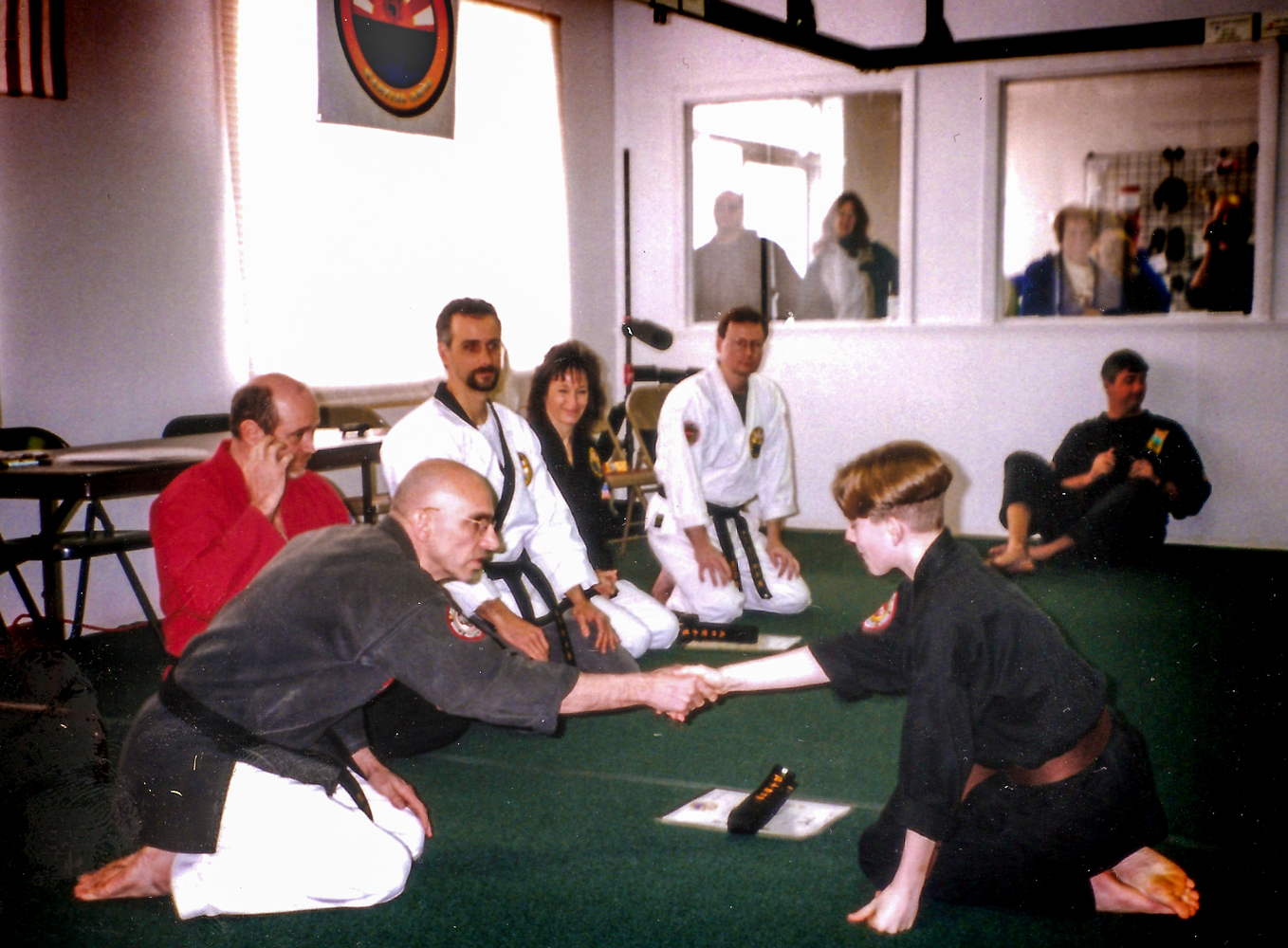
“What first brought you to philosophy?” Over the years, I think this has been the most common question that students, acquaintances, or colleagues have asked me. Academically speaking, I began my studies in 2003, but that is an entirely different story about the intellectual inspirations of psychedelics, which will require a post of its own at some point in the future. For my present purposes, we need to go back further, to the spring of 1990, Hudson Massachusetts. At the age of six, I entered what is now the Rising Sun Studio to begin what ended up being 10 years of training in Kenpo Jujitsu. The intentions and practices I cultivated in martial arts would later be transformed by another 10 years of snowboarding and then some further years being captivated by various forms of dance. What inspires me to reflect on the relationship between such embodied practices and philosophy today is how apparently unusual, and on occasion even scoff-worthy it has appeared to some of my colleagues that martial arts could be my earliest form of philosophical training. Nevertheless, my most important lesson from each of these practices today is that they were, on the whole, a form of phenomenology and that phenomenological reflection was what each of these practices were driving towards from the start.
On the face of it I don’t expect that it should require a stretch of the imagination to see an analogy between philosophy and martial arts, among innumerable other physical disciplines. In somewhat concise terms, the commonality appears to be found in one’s intention to navigate a space of relationships with an ever-expanding kind of ‘know-how’. Whereas martial arts may be the most general way to move through embodied relationships with wisdom, philosophy aims to do so in a maximally general conceptual space concerning the nature of wisdom itself. Both practices are self-reflective in that they endeavor to characterize new paths, or ways, of navigation. In the case of martial arts, dance, or extreme sports, this appears as styles, or forms, whereas in philosophy we find schools based on certain topics and assumptions. This is something I have become incredibly fascinated by in recent months, as it seems to me to provide key insights into what it might mean to develop a system of philosophy, or way of life.
The question I want to explore here is whether these embodied practices can teach professional philosophers a thing or two about how to pursue their own sub-domain of wisdom. To do so, I will take a look at some of the concepts that were particularly evident in my martial arts training and how they bear upon my understanding of the professional practice of philosophy. It is from this starting point that I would like to conduct a reflection on philosophy as an embodied art.
Etiquette
One way to grasp a potential oversight of academic philosophy with regard for the insights available to an embodied discipline like dance, martial arts, or an extreme sport is simply by comparing them in terms of etiquette. How do martial artists, dancers, or athletes earn respect, versus philosophers? One thing I have noticed from riding with professional snowboarders, sparring with martial arts masters, or dancing with truly excellent dancers is that they will never shy from an opportunity to develop their skills. Whether they are given a high-school gym, or an Olympic training facility, they simply do what they love and they share it with whomever they can. Experts thus earn respect for their capacity and willingness to demonstrate, to teach, and share their art at nearly a moment’s notice. This has generally appeared to me as an etiquette of passionate humility, and it is something I have rarely encountered in professional philosophers.
What I have found most surprising about my experiences in academic philosophy is just how scared most philosophers seem to be to reveal or discover the limits of their wisdom. So often professional philosophers will use their intellect to do anything possible to avoid genuinely engaging with others in good faith. Many strategies can be used for this purpose, but the issue seems to be that many have made up their mind beforehand about who is deserving of their honest perspective.
The most common strategy I have seen is contrarianism. This can easily be mistaken for philosophical skill, though it amounts to only pointing out what is surely mistaken about the reasoning of another so that it doesn’t have to be reflected any further. This would basically be equivalent to an athlete declining to train with others while remaining content to declare all that those being observed are making mistakes in their own efforts of exercise.
Another strategy is to simply exchange citations. This is also quite common and strikes me as equivalent to what old, retired athletes do when they get together for beers and recount the good old days when they, or someone they knew, had previously enacted their discipline with spectacular expertise. This strategy is clearly quite good for making those who are not as familiar with the popular names, theories, and ‘tricks’ feel quite out of the loop.
To briefly return to the top, the most disturbing aspect of etiquette that I have encountered in academia concerns respect. Whereas athletes have no problem demonstrating their passion whenever possible, there seems to be a curious presumption in academic philosophy that our interactions outside of lecture halls or conference rooms are somehow separate from the pursuit of wisdom. It seems to me that all such interactions are opportunities to demonstrate precisely how we are always both students and teachers of wisdom, whatever path it happens to involve.
To borrow an analogy from embodied cognitive science, this pursuit of wisdom cannot be separated from our embodied relations with others, just as a dance emerges between and among its participants. Upon reflection, my own expertise, whatever its extent, is the sum of my reactions to all the relationships and spaces I have occupied. This brings me to conclude that in the first instance, whatever our way is, it is an embodied intention to heal, grow, be vulnerable, and explicate ourselves with others.
Discipline
In many cases philosophers’ area of expertise could be likened to a martial artist or dancer studying just one move, like an arm-bar or twirl, to the total exclusion of all other techniques. Obviously, doing so does not create new ‘ways’, ‘paths’, or ‘forms’ of that discipline if that expertise remains disconnected from others. Such fragmentation seems to have resulted from the mistaken assumption that all disciplines can progress by breaking down the problems they focus on into smaller and smaller parts. While this worked well for the mechanistic advances of the industrial revolution, it does not work with comparable satisfaction for concepts, nor for any embodied art. The wisdom of conceptual, logical, and embodied arts are all holistic. In fact, the common goal of both philosophy and embodied arts seems to involve a kind of feedback loop that cascades from a particular change of technique or idea of one scale, to the formation of more general principles at a broader scale of the domain or discipline in general.
It should appear equally absurd for someone to come up with ever-more idiosyncratic ways to perform a particular move without connecting it to a wider practice, just as it is foolish to come up with increasingly specialized theoretical language without connecting it to peripheral fields of knowledge. I suppose it should be noted that I by no means mean to suggest that most philosophers commit this mistake, but I can say that most of the philosophers I have met or studied have made their careers on incredibly narrow areas of research that do not so often return to the questions of wisdom in general.

To advance beyond fifth degree black belt, a martial artist is often required to gain mastery in a completely different form; it is quite rare to find an expert dancer who does not dabble in multiple styles; and I think it’s fair to say that no extreme sport athlete will be content with just one means of defying gravity. Yet, philosophers seem all too comfortable to identify themselves with increasingly narrow domains of discussion, which often have ever-fleeting applicability to the practice of embracing the being and perspectives of others.
Maybe it’s just me, but the most beautiful forms of dance, extreme sport, or music for that matter, are always those that have integrated the forms of others. Similarly, the most effective martial arts have become those that have learned and synthesized the greatest range of alternative forms. What might it look like if philosophers were to intentionally pursue this end? For one thing, it strikes me as wildly antithetical to the analytic tradition to actively pursue such a synthesis. Nevertheless, taking the above into consideration, it also seems a moot point to provide an argument for why such a synthesis is necessary to arrive at an ever-more refined conception and enactment of wisdom.
Spirit
I think that the greatest irony is that even those philosophers who claim to endorse embodied cognitive science are somehow unaware of what it means to engage in the practice of philosophy as an embodied art. The art of philosophy is not merely one of collecting knowledge or memorizing argument structures to cleverly disorient one’s interlocutor; it is a cognitive-emotional process of synthesizing perspectives towards a more inclusive embodiment of wisdom. This is to say that philosophy must have an end, an aim, or goal of self-transformation. Hence, the analytic pretense of objective exploration in philosophy is fundamentally confounded by the fact that we must create the very conditions that make the pursuit of wisdom increasingly possible. It could thus be said that philosophy is inherently proleptic and teleological. To ignore this is to fundamentally ignore the conditions of philosophy and to fail to reflect on one’s own purpose as a philosopher.
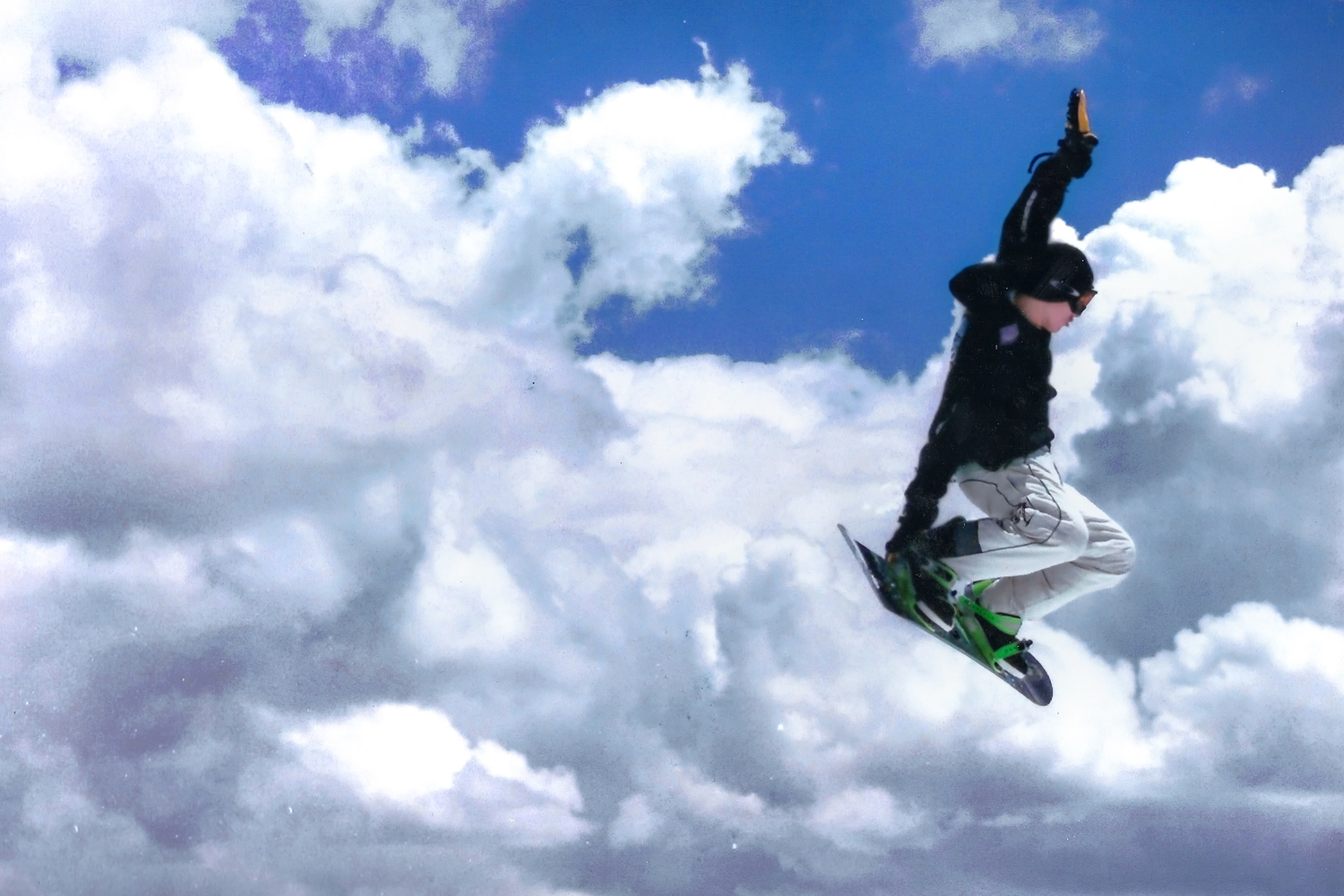
The embodied arts, including martial arts, extreme sports, and dance, have for the most part all been self-aware enough to recognize that the practice of self-transformation points towards a kind of fundamental good. As disciplines, each of these practices permit us to transmute trauma, anger, sadness, pain, etc., into intentions of creativity, self-empowerment, and agency. After spending twenty years of my life training in martial arts and freestyle snowboarding, it’s become apparent to me that the aim being pursued can be appropriately described as a spiritual enactment. Indeed, the attunement that we find when dancing with another can similarly be understood as the emergence of a spiritual space, in which we are both cleansed and empowered.
Certainly, one of the most crucial conditions of our entering such a common space is the good faith that self-transcendence is possible, that we are not to be identified with the limits of our beliefs, nor physical capacities of the present. What I find genuinely amazing is that while these embodied arts appear to have (for hundreds of years!) found the ongoing or perpetual cure to our existential depression and anxiety, professional philosophy ironically remains unequal to this task, or rests content in merely throwing words at the problem.
The last thing I want to say on the issue of spirit concerns the collective conditions of philosophy today. Philosophy, just like any embodied art, succeeds, progresses, and grows only insofar as a greater diversity of people can collectively participate in the practice. This means that the issues and debates surrounding diversity in universities today often appear to be missing the point. It is our birthright as conscious beings to pursue wisdom in intellectual and embodied ways. The business models operative in both academia and sports thus risk convincing us that some kind of antiquated form of competitive evolution is sufficient for progress. Consequently, ‘diversity’ becomes a mere numbers game.
I would like to suggest a symbiogenic alternative. Accordingly, we might downplay the glorification of those who perform at the peak of their discipline and instead attend to the conditions by which more individuals would be permitted to achieve excellence of wisdom in and through our collective participation with one another. As with the synthesis of alternative styles in any given embodied discipline, philosophy progresses by building bridges across the widest range of both disciplines and perspectives alike. Ultimately, it appears that the very same intention of philia-sophia can be found in expert dance, just as sparring partners, or philosophical interlocutors: it is an intention towards maintaining the intersubjective conditions of one’s discipline such that ongoing synthesis and differentiation of paths becomes possible.

 Dialectical Holism